
The Ultimate Guide to Long Island Property Management & Finding the Right Rental Property Manager
Investing in real estate across Nassau and Suffolk counties offers tremendous upside, driven by steady commuter demand, excellent school districts, and proximity to New York City. However, managing a portfolio on the island comes with distinct hurdles—ranging from local municipal codes and seasonal variations in the Hamptons to complex tenant laws.
Whether you own a single-family home in Rockville Centre, a multi-family property in Patchogue, or a luxury estate on the North Fork, partnering with a professional property management company is often the dividing line between a stressful headache and a passive, cash-flowing asset.
In this comprehensive guide, we’ll explore the financial data behind the property management in Long Island market, what a top-tier rental property manager should handle, and how to find the ideal fit for your investment goals.
The Hard Numbers: How Professional Management Boosts Income and Cuts Vacancy
Many real estate investors hesitate to hire a management firm due to the upfront percentage fee (typically 8% to 12% of monthly rent). However, empirical industry data reveals that professional management routinely pays for itself—and often generates higher net operating income than self-managing.
1. Slashed Vacancy Windows
- Self-Managed Lag: Independent landlords on Long Island often experience 4 to 8 weeks of vacancy per tenant turnover due to limited marketing reach, slow response times, and manual screening bottlenecks.
- Managed Efficiency: Professional property managers utilize multi-channel syndication networks, professional photography, and streamlined showing processes to cut downtime to 1 to 3 weeks.
- The Financial Impact: With average Long Island rents running high, shortening a vacancy window by even 3 weeks on a $3,000/month rental saves over $2,200 straight to your bottom line—recovering a substantial portion of annual management fees instantly.
2. Lowered Maintenance and Repair Costs
- Vendor Discounts vs. Retail Rates: Self-managing landlords pay retail rates for plumbing, HVAC, and general repairs. Established property management firms leverage bulk purchasing power and preferred vendor pricing, consistently saving owners 15% to 25% on maintenance and contractor costs.
- Preserving Asset Value: Proactive property inspections catch minor issues (like a minor roof leak or HVAC inefficiency) before they evolve into costly capital expenses, safeguarding long-term asset appreciation.
3. Optimized Rental Pricing (Avoiding Under-pricing)
Pricing a rental property is both an art and a science. Landlords who rely on generic online estimates often underprice units by 5% to 10%—or conversely, overprice them, leading to prolonged vacancy bleed. Local managers use real-time comparative market analysis (CMA) data specific to micro-neighborhoods (from Garden City to Montauk) to capture maximum market rent without leaving money on the table.
Why Long Island Real Estate Demands Specialized Management
The Long Island rental market is unique. Unlike sprawling metro areas with uniform housing stock, Long Island features a mosaic of property types: historic Victorians, suburban split-levels, modern condominiums, co-ops, and high-end seasonal vacation rentals.
Navigating this market requires localized insight. A competent property management partner protects your investment by helping you bypass common pitfalls:
- Navigating Complex Local Laws: New York tenant laws are notoriously strict. A professional rental property manager ensures absolute compliance with fair housing regulations, security deposit handling laws, and local town ordinances.
- Targeting the Right Demographic: From young professionals relocating from NYC to established suburban families, marketing a property requires understanding hyper-local nuances across Nassau and Suffolk counties.
- Mitigating Vacancy Losses: Time is money. Local managers leverage multi-platform listing syndication and robust applicant screening to minimize costly vacancies.
Core Services Offered by a Long Island Rental Property Manager

When evaluating companies, it helps to understand what a full-service property management agreement typically entails. The best operators take over the day-to-day operational weight, allowing you to enjoy truly passive income:
- Strategic Property Marketing & Pricing: Utilizing comparative market analysis (CMA) to price your rental competitively while maximizing monthly yield.
- Rigorous Tenant Screening: Conducting background checks, credit evaluations, employment verification, and rental history audits to secure reliable, long-term occupants.
- Rent Collection & Financial Reporting: Automating rent collection, enforcing lease terms, and providing transparent 24/7 owner portals with monthly financial dashboards.
- Proactive Maintenance & Repairs: Coordinating with a trusted network of licensed local contractors for routine upkeep and emergency repairs, safeguarding your physical asset.
- Legal Compliance & Eviction Protection: Handling legal notices and overseeing processes smoothly if a tenant relationship breaks down.
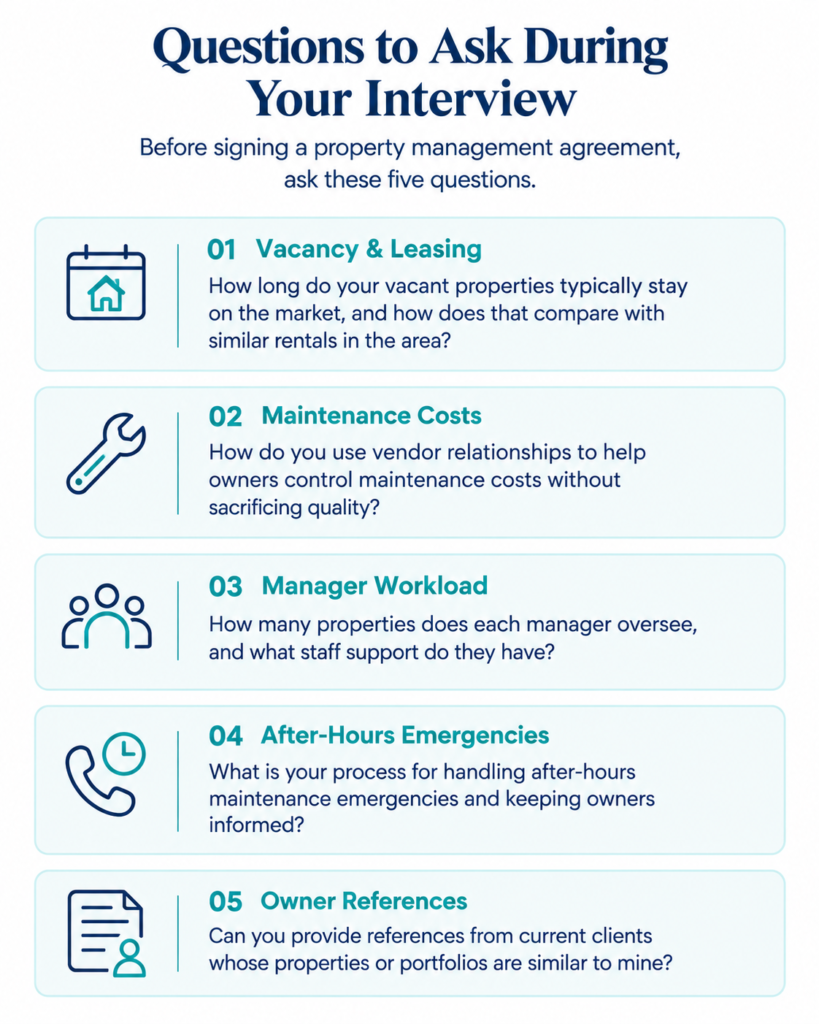
Not all management firms are created equal. To find a true partner for your investment portfolio, keep these core criteria in mind:
1. Valid NYS Real Estate Broker License
In New York State, managing properties for others generally requires a valid real estate broker’s license. Always verify credentials before signing an agreement.
2. Hyper-Local Market Expertise
Long Island spans two distinct counties with vastly different sub-markets. Ensure your chosen rental property manager has verifiable experience in your specific town or village—whether that’s handling luxury rentals on the East End or multi-family units in western Nassau.
3. Transparent Fee Structures
Standard residential property management fees on Long Island typically range from 8% to 12% of the monthly rental income for long-term leases. Be sure to ask about hidden costs, such as:
- Leasing or tenant-placement fees (often equal to one month’s rent or a flat percentage)
- Contract setup fees
- Maintenance markups or project oversight fees for major renovations
4. Robust Tech Integration & Communication
Modern property investors expect transparency. Look for firms that offer online owner portals, automated financial statements, and digital maintenance tracking so you can monitor your property’s performance from anywhere.
Final Thoughts: Finding Your Ideal Fit
Choosing the right rental property manager on Long Island comes down to looking beyond the base management fee and calculating total net yield. When you factor in reduced vacancy windows, lower contractor and maintenance costs, optimized rental pricing, and the sheer reclamation of your personal time, professional property management proves to be an indispensable growth engine for your portfolio.
Evaluate your options carefully, demand financial transparency, and secure a professional who treats your real estate investment like their own.
